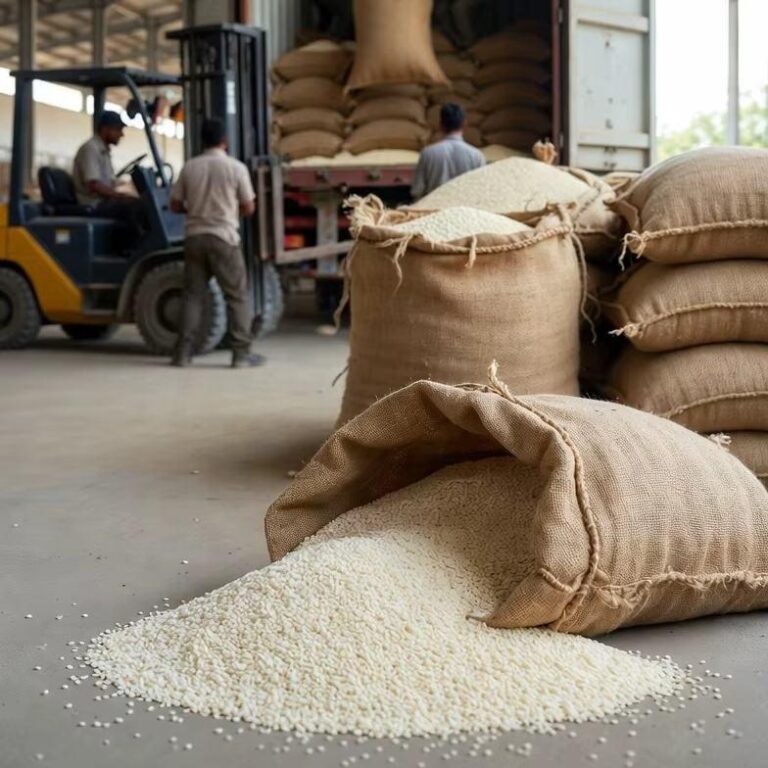

How to Import Agricultural Commodities from Nigeria: A Guide for International Buyers
Nigeria produces a variety of agricultural commodities that can serve international food manufacturers, processors, wholesalers, distributors and other commercial buyers.
Products such as sesame seeds, cocoa beans, ginger, cashew nuts, soybeans, cassava and shea products may be relevant to different industries, depending on their grade, processing level and intended application.
For an international buyer, importing agricultural commodities involves more than agreeing on a price. The buyer must evaluate the supplier, establish product specifications, understand shipping responsibilities and confirm that the shipment meets the destination country’s requirements.
This guide explains the key stages involved in sourcing agricultural commodities from Nigeria.
Step 1: Identify the Product and Intended Use
Begin by identifying the commodity your business needs.
Consider whether you require raw agricultural produce, processed ingredients or another commercially prepared product. The distinction matters because processing level, storage requirements, quality parameters and regulatory obligations may differ.
For example:
- Food manufacturers may source sesame seeds, cocoa beans, cashew nuts or ginger.
- Food and ingredient processors may require soybeans, cassava products or other agricultural raw materials.
- Cosmetic manufacturers may investigate suitable shea butter or cocoa butter.
- Feed manufacturers may assess agricultural by-products such as palm kernel cake.
The product list is only a starting point. Confirm that the proposed product is suitable for your intended application and that the supplier can meet your requirements.
Step 2: Define Your Product Specification
A detailed specification allows suppliers to quote against the same requirements.
Include the product name, grade, origin, processing form, required quantity, packaging and acceptable quality limits.
Depending on the commodity, the specification may also cover moisture content, foreign matter, colour, size, oil content, microbiological requirements, chemical residues or other relevant parameters.
For example, a buyer sourcing sesame seeds should state whether hulled or unhulled seeds are required and specify the applicable quality and inspection requirements.
Avoid relying on vague descriptions such as “premium quality.” A written specification with measurable acceptance criteria provides a stronger basis for procurement and quality control.
Step 3: Verify the Supplier
Supplier verification is one of the most important steps in international commodity purchasing.
Before committing to a transaction:
- Confirm the company’s legal identity and business contact details.
- Ask about its sourcing network and ability to fulfil the requested quantity.
- Request product specifications and representative samples where appropriate.
- Check trade references and available evidence of previous transactions.
- Agree on how product quality and quantity will be verified.
- Confirm the identity and authority of the parties signing the contract.
Where the value or risk of the transaction warrants it, consider independent business checks, third-party inspection and professional legal or trade advice.
Do not assume that a polished website, a company registration document or a product photograph alone proves that the supplier can fulfil a particular shipment.
Step 4: Request and Compare Quotations
Provide shortlisted suppliers with the same specification and delivery requirements.
A useful quotation should identify the product, quantity, unit price, currency, packaging, delivery location, quotation validity and applicable trade terms.
It should also clarify any costs that are excluded from the price.
Compare the complete commercial offer rather than the headline figure alone. A cheaper product may involve different quality, packaging, transport costs or delivery responsibilities.
For repeat supply arrangements, discuss how prices, quantities and delivery schedules will be confirmed for subsequent orders.
Step 5: Agree on Payment and Contract Terms
Before funds are transferred, ensure that the contract describes the agreed transaction clearly.
Important provisions include:
- Product description and quality specification.
- Quantity and acceptable tolerances.
- Price, currency and payment schedule.
- Delivery terms and named location or port.
- Inspection and acceptance procedures.
- Required shipping documents.
- Delivery timetable and procedures for delays.
- Remedies for non-conforming goods and dispute resolution.
Depending on the transaction and the parties’ banking arrangements, payment may involve a bank transfer, documentary collection or a letter of credit.
A letter of credit should be structured with appropriate banking and trade advice. Its effectiveness depends on the issuing bank, agreed terms, documentary conditions and compliance with those conditions.
Never assume that a payment method automatically removes counterparty risk.
Step 6: Choose Appropriate Shipping Terms
The shipping arrangement determines important responsibilities for transportation, costs and risk.
Three commonly used Incoterms rules are:
EXW — Ex Works: The seller makes the goods available at the agreed place. The buyer generally takes on substantial responsibility for collection and onward arrangements. For exports, the parties should check whether EXW is suitable for the transaction and local requirements.
FOB — Free On Board: Used for sea or inland-waterway transport. The seller delivers the goods on board the vessel at the named port of shipment, and risk transfers according to the rule.
CIF — Cost, Insurance and Freight: Used for sea or inland-waterway transport. The seller pays the cost and freight to the named destination port and obtains the required insurance, but risk generally transfers when the goods are loaded on board at the port of shipment.
The parties should specify the named place or port and applicable Incoterms edition in the contract. Other delivery rules may be more appropriate for containerised or multimodal shipments.
Step 7: Confirm Export and Import Documentation
Required documents vary by commodity, destination, transport method and applicable law.
Depending on the shipment, documentation may include a commercial invoice, packing list, transport document, certificate of origin, inspection report, phytosanitary certificate or fumigation certificate.
The destination country may also require product registration, testing, permits, traceability information, specific labelling or additional certificates.
Before finalising the shipment, work with the supplier, freight forwarder, customs broker and relevant authorities to establish the exact requirements.
For agricultural commodities, do not assume that a certificate required for one product is automatically required for another.
Step 8: Arrange Inspection, Loading and Delivery
The parties should agree on how the goods will be checked before dispatch.
Depending on the commodity and transaction, this may involve weighing, sampling, laboratory testing, packaging inspection or a pre-shipment inspection by an independent provider.
Confirm who pays for the inspection, which standards will be used and what happens if the goods fail to meet the contract specification.
After dispatch, track the shipment using the available transport documentation and maintain copies of the commercial and regulatory records.
Clear communication between the buyer, supplier and logistics providers helps resolve issues before they become costly delays.
Sourcing Nigerian Commodities with Mese Investment Limited
Mese Investment Limited works with farmers, local buying agents, suppliers and business partners to support the sourcing and supply of Nigerian commodities. Its services include local commodity supply, international trade support and trade advisory.
International buyers can discuss their required products, quantities, specifications, delivery destinations and preferred commercial terms with the company.
The suitability of a proposed transaction depends on product availability, agreed specifications, regulatory requirements and the commercial arrangements confirmed by the parties.
Request an Import or Commodity Sourcing Enquiry
If your business is considering importing agricultural commodities from Nigeria, prepare the following information before contacting a supplier:
- Commodity and intended application.
- Required grade and specification.
- Estimated quantity and order frequency.
- Destination country and delivery port.
- Packaging and inspection requirements.
- Preferred shipping and payment terms.
Visit the Products page to explore the commodities listed by Mese Investment Limited, or use the About Us page to learn more about the company’s sourcing, international trade and advisory services.
Successful commodity importing begins with supplier verification, a clear specification and a written agreement that defines quality, payment, documentation and delivery responsibilities.